



Gas, Diesel, or Electric: Which Powertrain Is Best for Your Fleet?
Choosing the right vehicles for your business isn’t just about size or price — the powertrain you choose can directly impact operating costs, productivity, and long-term ROI. With more options than ever before, many business owners ask us the same question:
Should my fleet run on gas, diesel, or electric?
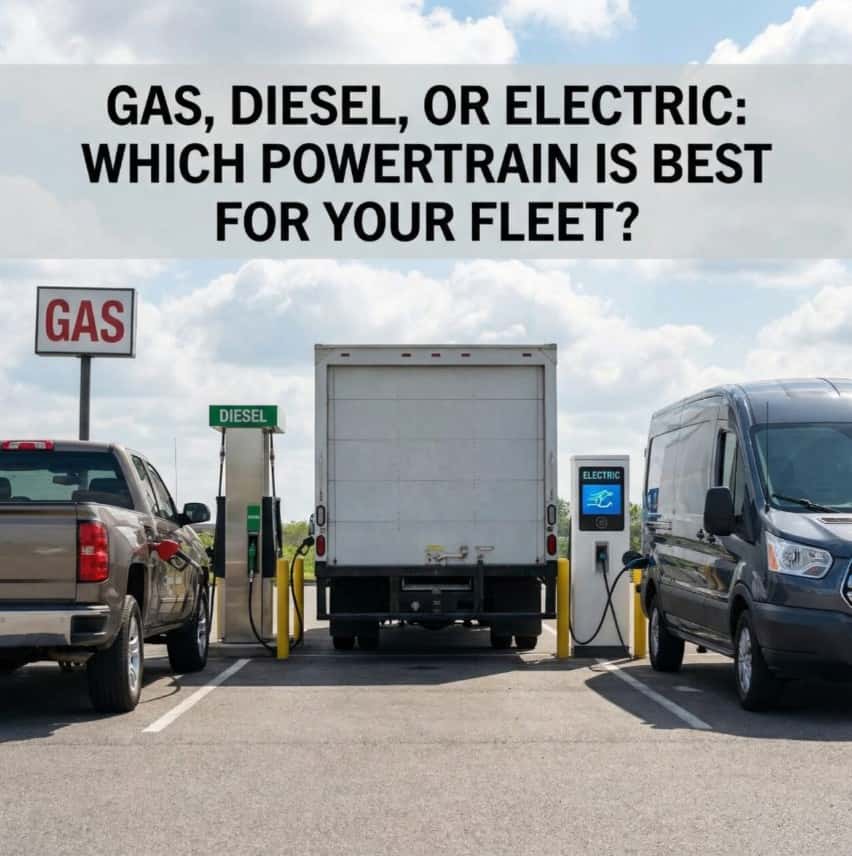
At Bachman Commercial in Louisville, we work with contractors, delivery services, trades, and growing businesses every day. Here’s a clear breakdown to help you decide which powertrain makes the most sense for your operation.
Gas-Powered Commercial Vehicles
Best for versatility, lower upfront cost, and mixed-use fleets
Gas engines remain the most common choice for small and mid-size fleets — and for good reason.
Pros
- Lower purchase price compared to diesel or EVs
- Widely available fuel
- Quieter operation than diesel
- Lower maintenance costs for light-to-moderate use
- Ideal for stop-and-go city driving
Considerations
- Less torque than diesel for heavy towing
- Fuel economy drops under heavy load
- Shorter engine lifespan under constant heavy-duty use
Best for:
Plumbers, electricians, sales fleets, service vans, real estate companies, and businesses with mixed city/highway driving.
Diesel-Powered Commercial Vehicles
Best for towing, payload, and long-term heavy-duty use
Diesel engines shine when the job demands torque and endurance.
Pros
- Superior torque for towing and hauling
- Better fuel efficiency under load
- Longer engine lifespan
- Ideal for highway miles and sustained use
- Strong resale value
Considerations
- Higher upfront cost
- More expensive maintenance
- Diesel fuel costs can fluctuate
- Not ideal for short, stop-and-go trips
Best for:
Construction, landscaping, towing, heavy equipment transport, and long-distance highway fleets.
Electric Commercial Vehicles (EVs)
Best for urban routes, predictable mileage, and long-term savings
Electric commercial vehicles are becoming a serious option for many businesses — especially in urban and regional settings.
Pros
- Extremely low operating costs
- Minimal maintenance (no oil changes, fewer moving parts)
- Quiet operation
- Ideal for stop-and-go routes
- Potential tax incentives and credits
- Strong sustainability and brand image benefits
Considerations
- Higher upfront cost
- Charging infrastructure planning required
- Limited range for some applications
- Not ideal yet for heavy towing
Best for:
Delivery fleets, service vans, municipal vehicles, last-mile delivery, and businesses with predictable daily routes.
Side-by-Side Comparison
| Powertrain | Upfront Cost | Fuel Cost | Maintenance | Towing | Best Use |
| Gas | Low | Moderate | Low–Moderate | Moderate | Mixed & city driving |
| Diesel | High | Moderate | Higher | Excellent | Heavy-duty, long-haul |
| Electric | Highest | Lowest | Lowest | Limited | Urban & short routes |
So… Which One Is Right for Your Business?
There’s no universal answer — the right choice depends on:
- How far your vehicles drive each day
- How much weight you tow or carry
- Whether you operate in city or highway conditions
- Your maintenance budget
- Your long-term growth plans
Many businesses today run mixed fleets, using gas or diesel for heavy-duty roles and EVs for local service or delivery — maximizing efficiency across operations.
How Bachman Commercial Helps You Decide
At Bachman Commercial, we don’t just sell vehicles — we help businesses build smart fleets. We’ll help you:
- Analyze real-world operating costs
- Match powertrains to job requirements
- Explore financing and tax advantages
- Plan for future fleet growth
- Coordinate upfitting and maintenance support
Whether you’re buying one work truck or managing an entire fleet, our team is here to make the process simple and strategic.
Ready to Build the Right Fleet?
Visit Bachman Commercial in Louisville, KY or contact our commercial specialists today. We’ll help you choose the powertrain — and the vehicles — that work as hard as you do.
0 comment(s) so far on Gas, Diesel, or Electric: Which Powertrain Is Best for Your Fleet?